
Back to: AjitPravas
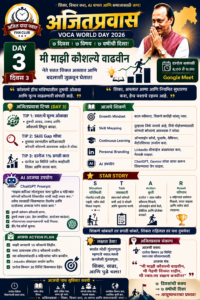 Day 3 – Professional Skills & Personal Excellence
Theme
Become an Irreplaceable Professional
Learning Objectives
- Communication mastery
- Emotional intelligence
- Productivity systems
- Executive presence
Modules
- Communication
- Negotiation
- Public Speaking
- Decision Making
- Time Management
- Personal Branding
Frameworks
- Covey Time Matrix
- Eisenhower Matrix
- DISC Personality
- Emotional Intelligence
Case Studies
- Satya Nadella
- N. R. Narayana Murthy
Activity
Leadership Simulation
Deliverable
Professional Development Plan
Day 3 – Professional Skills & Personal Excellence
Become an Irreplaceable Professional
“Technical skills may get you hired, but professional excellence determines how far you grow.”
In today’s competitive world, organizations are no longer looking only for degrees or certifications. They seek professionals who can communicate effectively, collaborate across teams, make informed decisions, solve problems under pressure, lead with confidence, and continuously adapt to change.
The workplace is evolving rapidly with Artificial Intelligence, automation, hybrid work, and global collaboration reshaping expectations. Technical expertise is essential, but it is professional skills—often called power skills or human skills—that distinguish exceptional performers from the rest.
This session is designed to help participants develop the mindset, behaviors, and competencies required to become trusted professionals, influential leaders, and lifelong learners.
Why Professional Excellence Matters
Every organization invests in technology, infrastructure, and processes. However, the greatest competitive advantage remains its people.
Research consistently shows that career success is strongly influenced by communication, emotional intelligence, leadership, adaptability, and the ability to work effectively with others.
Consider two professionals with similar technical qualifications:
-
One communicates clearly, collaborates well, manages time effectively, and demonstrates leadership.
-
The other has strong technical skills but struggles with communication, teamwork, and adaptability.
Over time, the first individual is far more likely to earn promotions, lead teams, and influence strategic decisions.
Professional excellence is therefore not about being perfect—it is about continuously improving the skills that enable others to trust, respect, and rely on you.
Learning Objectives
By the end of this session, participants will be able to:
-
Communicate with clarity, confidence, and purpose.
-
Develop emotional intelligence for stronger relationships.
-
Negotiate effectively while creating mutually beneficial outcomes.
-
Deliver impactful presentations and public speeches.
-
Improve productivity through structured time management.
-
Build a professional personal brand.
-
Strengthen decision-making and leadership capabilities.
-
Create a comprehensive professional development plan.
Module 1: Communication Mastery
Communication: The Foundation of Professional Success
Communication is more than speaking—it is the ability to convey ideas clearly, listen actively, influence decisions, and build meaningful relationships.
Every interaction contributes to your professional reputation.
Effective communication involves:
-
Listening with intent.
-
Asking thoughtful questions.
-
Presenting ideas logically.
-
Writing professionally.
-
Understanding non-verbal cues.
-
Adapting communication styles to different audiences.
The Communication Cycle
Sender
↓
Message
↓
Medium
↓
Receiver
↓
Feedback
↓
Improvement
Every stage must be managed carefully to avoid misunderstandings.
Principles of Effective Communication
Clarity
Avoid unnecessary complexity.
Use simple and precise language.
Conciseness
Deliver essential information without overwhelming the audience.
Confidence
Speak with conviction while remaining respectful.
Confidence inspires trust.
Active Listening
Listen to understand—not merely to respond.
Great leaders spend more time listening than speaking.
Empathy
Understand the emotions, concerns, and perspectives of others before responding.
Empathy strengthens collaboration.
Professional Communication Channels
-
Face-to-face conversations
-
Virtual meetings
-
Email
-
Business reports
-
Instant messaging
-
Social media
-
Executive presentations
Each requires different communication techniques.
Module 2: Negotiation
Negotiation Is About Creating Value
Negotiation is not about winning an argument.
It is about reaching agreements that satisfy all stakeholders while preserving relationships.
Professionals negotiate every day:
-
Salary discussions
-
Client contracts
-
Vendor agreements
-
Team priorities
-
Resource allocation
-
Project timelines
The Negotiation Process
Prepare
↓
Understand Interests
↓
Explore Options
↓
Create Value
↓
Reach Agreement
↓
Maintain Relationship
Effective Negotiation Principles
-
Focus on interests rather than positions.
-
Separate people from the problem.
-
Listen before proposing solutions.
-
Prepare alternatives.
-
Seek mutually beneficial outcomes.
-
Build trust throughout the process.
Example
Instead of asking:
“I need more budget.”
Ask:
“How can we achieve project objectives while remaining within organizational constraints?”
This shifts the conversation from conflict to collaboration.
Module 3: Public Speaking
Every Professional Is a Speaker
Whether presenting to a client, leading a meeting, teaching a class, or pitching an idea, public speaking is an essential leadership skill.
Confidence is developed through preparation and practice.
Structure of an Effective Presentation
Opening
Capture attention with:
-
A question
-
A story
-
A surprising statistic
-
A quote
Body
Present ideas logically.
Support them with:
-
Facts
-
Examples
-
Case studies
-
Visuals
Closing
Summarize key messages.
Provide a clear call to action.
Leave the audience with a memorable takeaway.
Overcoming Stage Fear
-
Practice repeatedly.
-
Visualize success.
-
Know your audience.
-
Control breathing.
-
Focus on delivering value rather than seeking perfection.
Module 4: Decision Making
Every Decision Shapes Your Future
Professionals make hundreds of decisions every day.
Some are routine.
Others define careers.
Effective decision-making combines:
-
Data
-
Experience
-
Logic
-
Ethics
-
Strategic thinking
Decision-Making Process
Identify Problem
↓
Collect Information
↓
Generate Alternatives
↓
Evaluate Risks
↓
Select Best Option
↓
Implement
↓
Review Results
Avoid Common Decision Biases
-
Confirmation bias
-
Anchoring bias
-
Emotional decision-making
-
Groupthink
-
Overconfidence
Recognizing biases leads to better judgment.
Module 5: Time Management
Time Is Your Most Valuable Resource
Everyone has the same 24 hours.
The difference lies in how those hours are invested.
Successful professionals focus on high-impact activities rather than simply staying busy.
Productivity Habits
-
Plan each day.
-
Prioritize important work.
-
Minimize distractions.
-
Delegate where appropriate.
-
Schedule deep work.
-
Review progress regularly.
The Four Productivity Principles
Plan
↓
Prioritize
↓
Perform
↓
Reflect
Consistency matters more than intensity.
Module 6: Personal Branding
Your Reputation Is Your Brand
Personal branding is the perception others have of you based on your expertise, behavior, values, and professionalism.
A strong personal brand is built through consistency.
Ask yourself:
-
What do people remember about me?
-
What value do I consistently provide?
-
What expertise am I known for?
-
How do I conduct myself online and offline?
Building Your Professional Brand
Demonstrate Expertise
Share knowledge through articles, presentations, mentoring, or professional communities.
Build Credibility
Honor commitments.
Deliver quality work consistently.
Maintain ethical standards.
Develop Visibility
Attend conferences.
Engage on professional platforms.
Expand your network.
Practice Lifelong Learning
Continuously upgrade skills and remain relevant in a changing world.
Professional Excellence Frameworks
1. Covey Time Matrix
Stephen Covey’s Time Management Matrix categorizes work into four quadrants:
| Quadrant | Description | Examples |
|---|---|---|
| Q1 | Urgent & Important | Deadlines, emergencies, crises |
| Q2 | Important but Not Urgent | Learning, planning, relationship building, exercise |
| Q3 | Urgent but Less Important | Interruptions, unnecessary meetings |
| Q4 | Neither Urgent nor Important | Excessive social media, distractions |
Key Insight: High-performing professionals invest most of their time in Quadrant 2, where long-term growth, preparation, and prevention occur.
2. Eisenhower Matrix
Popularized by U.S. President Dwight D. Eisenhower, this matrix helps prioritize tasks:
-
Do: Urgent and important.
-
Schedule: Important but not urgent.
-
Delegate: Urgent but less important.
-
Eliminate: Neither urgent nor important.
This framework enables professionals to focus on high-value work rather than reacting to constant interruptions.
3. DISC Personality Model
Understanding personality differences improves communication and teamwork.
Dominance (D)
-
Results-oriented
-
Decisive
-
Competitive
Influence (I)
-
Enthusiastic
-
Persuasive
-
Relationship-focused
Steadiness (S)
-
Patient
-
Supportive
-
Reliable
Conscientiousness (C)
-
Analytical
-
Detail-oriented
-
Systematic
Great professionals adapt their communication style based on the personalities they interact with.
4. Emotional Intelligence (EQ)
Technical intelligence (IQ) may secure opportunities, but Emotional Intelligence sustains leadership.
Daniel Goleman’s EQ framework includes:
Self-Awareness
Recognize your emotions and their impact.
Self-Regulation
Manage emotions under pressure.
Motivation
Maintain resilience and commitment.
Empathy
Understand the feelings and perspectives of others.
Social Skills
Build trust, influence, and collaboration.
Professionals with strong EQ create healthier workplaces, resolve conflicts effectively, and inspire others.
Case Studies
Satya Nadella – Leading with Empathy
When Satya Nadella became CEO of Microsoft in 2014, he inherited a successful but internally competitive organization. Rather than relying solely on technology strategy, he transformed the company’s culture by emphasizing empathy, collaboration, and a growth mindset.
Under his leadership, Microsoft embraced cloud computing, strengthened partnerships, invested heavily in AI, and encouraged continuous learning. The company’s renewed focus on innovation and inclusion contributed to significant business growth and restored its reputation as one of the world’s most admired technology companies.
Professional Lesson: Sustainable leadership begins with empathy, learning, and empowering others.
N. R. Narayana Murthy – Values-Driven Leadership
As the co-founder of Infosys, N. R. Narayana Murthy demonstrated that professional excellence is built on ethics, transparency, and disciplined execution.
He established a culture of corporate governance, meritocracy, and continuous learning at a time when India’s IT industry was still emerging. His emphasis on integrity and customer trust enabled Infosys to become a globally respected technology company.
Professional Lesson: Credibility and ethical leadership create enduring organizations and lasting professional reputations.
Activity: Leadership Simulation
Participants will engage in a realistic leadership simulation designed to strengthen communication, decision-making, negotiation, and teamwork.
Scenario
A technology company is launching a new AI-based product within three months. Midway through the project, several challenges emerge:
-
The budget is reduced by 20%.
-
A key technical expert resigns.
-
A major client requests additional features.
-
Team morale begins to decline.
-
A competitor announces a similar product.
Participants assume different leadership roles, such as:
-
Project Manager
-
Product Owner
-
Finance Lead
-
Marketing Manager
-
Human Resources Representative
-
Customer Representative
Tasks
-
Analyze the situation.
-
Prioritize critical issues.
-
Negotiate trade-offs.
-
Communicate decisions to stakeholders.
-
Develop an action plan.
-
Present the strategy to the executive committee.
Evaluation Criteria
-
Leadership effectiveness
-
Communication clarity
-
Team collaboration
-
Strategic thinking
-
Decision quality
-
Time management
-
Professional conduct
Deliverable: Professional Development Plan
Each participant will prepare a structured Professional Development Plan (PDP) that outlines their roadmap for continuous growth.
The plan should include:
-
Professional Vision Statement
-
Career Goals (1-Year, 3-Year, and 7-Year)
-
Core Strengths
-
Areas for Improvement
-
Communication Development Goals
-
Leadership Competencies to Build
-
Time Management Strategy
-
Personal Branding Plan
-
Learning and Certification Roadmap
-
Networking and Mentorship Goals
-
Quarterly Success Metrics
-
Reflection and Continuous Improvement Schedule
Key Takeaways
By the end of Day 3, participants will:
-
Communicate with confidence and clarity across professional settings.
-
Negotiate effectively while maintaining strong relationships.
-
Deliver impactful presentations and influence diverse audiences.
-
Make thoughtful, evidence-based decisions under uncertainty.
-
Manage time using proven productivity frameworks.
-
Understand personality differences to collaborate more effectively.
-
Develop emotional intelligence for stronger leadership and teamwork.
-
Build a credible personal brand grounded in expertise, integrity, and lifelong learning.
-
Create a practical Professional Development Plan aligned with long-term career aspirations.
“An irreplaceable professional is not defined by technical expertise alone, but by the ability to communicate with purpose, lead with empathy, make sound decisions, and continuously grow. In a world where technology evolves rapidly, the professionals who combine competence with character will always remain indispensable.”