
Introduction: The Rise of the Digital Economy
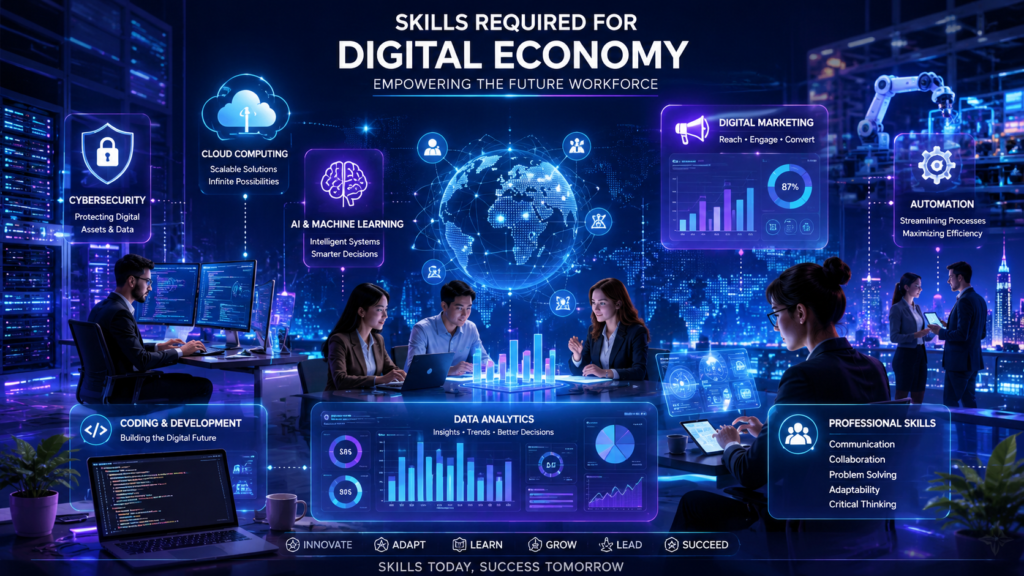
The digital economy is transforming the way businesses operate, communicate, and deliver value to customers. Technologies such as artificial intelligence (AI), cloud computing, big data, automation, and digital marketing are reshaping industries across the globe.
As organizations continue their digital transformation journeys, the demand for professionals with strong digital skills is growing rapidly. Individuals who develop these skills will be better positioned to secure high-paying jobs, adapt to technological changes, and remain competitive in the modern workforce.
Understanding the skills required for the digital economy is essential for students, professionals, and business leaders looking to thrive in an increasingly technology-driven world.
What Is the Digital Economy?
The digital economy refers to economic activities that rely on digital technologies, internet connectivity, and data-driven processes. It includes sectors such as:
Link on “digital economy”:-https://www.oecd.org/digital/
- E-commerce
- Digital marketing
- Software development
- Artificial intelligence
- Cloud computing
- Fintech
- Cybersecurity
- Data analytics
Today, almost every industry depends on digital tools and platforms to improve efficiency, enhance customer experiences, and drive innovation.
Why Digital Skills Matter More Than Ever
Organizations are actively seeking professionals who can work with emerging technologies and contribute to digital transformation initiatives.
Digital skills help individuals:
- Increase employability
- Improve productivity
- Adapt to changing job requirements
- Access better career opportunities
- Stay competitive in the global workforce
Professionals who continuously upgrade their skills are more likely to succeed in the rapidly evolving digital landscape.
Essential Skills Required for the Digital Economy
1. Data Analytics
Data has become one of the most valuable assets for modern businesses. Organizations use data to understand customer behavior, improve operations, and make informed decisions.
Important data analytics skills include:
- Data visualization
- Data interpretation
- Statistical analysis
- Business intelligence tools
- Reporting and dashboard creation
Professionals who can convert data into actionable insights are highly valued across industries.
2. Digital Marketing
As businesses increasingly operate online, digital marketing has become a critical skill.
Key digital marketing skills include:
- Search Engine Optimization (SEO)
Link SEO to:- https://developers.google.com/search/docs
- Content marketing
- Social media marketing
- Email marketing
- Pay-Per-Click (PPC) advertising
- Marketing analytics
Digital marketers help organizations build brand awareness, generate leads, and drive revenue growth.
3. Coding and Automation
Basic programming knowledge is becoming beneficial even for non-technical professionals.
Popular programming languages include:
- Python
- JavaScript
- SQL
- Java
Automation skills help businesses reduce manual work, improve efficiency, and streamline operations.
4. Cybersecurity Awareness
With the increasing number of cyber threats, organizations need employees who understand digital security best practices.
Important cybersecurity skills include:
- Password management
- Threat awareness
- Data protection
- Secure online practices
- Risk assessment
Cybersecurity knowledge helps organizations protect sensitive information and maintain customer trust.
5. Cloud Computing
Cloud platforms have become the foundation of modern business operations.
Popular cloud technologies include:
- Amazon Web Services (AWS)
- Microsoft Azure
- Google Cloud Platform (GCP)
Cloud computing skills are in high demand as businesses continue migrating applications and data to the cloud.
Link “cloud computing” :- https://aws.amazon.com/what-is-cloud-computing/
6. Communication and Collaboration Skills
Technical expertise alone is not enough in the digital economy.
Professionals must also demonstrate:
- Effective communication
- Team collaboration
- Problem-solving
- Critical thinking
- Adaptability
These skills enable teams to work efficiently in digital and remote work environments.
Strategies for Developing Digital Skills
Focus on Skill-Based Learning
Practical learning often provides greater value than theoretical knowledge. Online courses, certifications, workshops, and hands-on projects help build real-world expertise.
Learn Digital Tools and Platforms
Familiarity with modern digital tools can significantly improve productivity and employability.
Examples include:
- Google Analytics
- Microsoft Power BI
- HubSpot
- Canva
- ChatGPT
- Project management platforms
Stay Updated with Industry Trends
Technology evolves rapidly. Following industry blogs, webinars, online communities, and professional networks helps individuals remain informed about emerging developments.
Earn Industry Certifications
Certifications validate expertise and demonstrate commitment to continuous learning.
Popular certifications include:
- Google Digital Marketing Certifications
- AWS Certifications
- Microsoft Certifications
- Cybersecurity Certifications
- Data Analytics Certifications
Future Outlook: The Growing Demand for Digital Skills
The future job market will be increasingly driven by technology, automation, and data. Roles related to artificial intelligence, cybersecurity, cloud computing, digital marketing, and analytics are expected to experience significant growth over the coming years.
Organizations will continue prioritizing candidates who possess both technical knowledge and strong problem-solving abilities.
Individuals who invest in developing digital skills today will be better prepared for tomorrow’s opportunities.
Benefits of Building Digital Economy Skills
Developing digital skills offers several advantages:
- Improved career opportunities
- Higher earning potential
- Increased workplace productivity
- Better adaptability to technological change
- Enhanced professional growth
- Greater job security
These benefits make digital learning one of the most valuable investments for long-term career success.
Conclusion
The digital economy is reshaping industries and creating new opportunities for skilled professionals. As businesses continue adopting advanced technologies, the demand for digital expertise will only increase.
Skills such as data analytics, digital marketing, coding, cybersecurity, cloud computing, and effective communication are becoming essential across nearly every sector.
By continuously learning, embracing new technologies, and staying informed about industry trends, individuals can build successful careers and remain competitive in the digital age.
To learn more about our organization and our expertise in the digital landscape, visit our About Us page.
If you have any questions or would like to learn more about digital skills and technology trends, please Contact Us.
Link :-
About Us :- https://morepublicconnect.in/about/
Contact Us :- https://morepublicconnect.in/contact/
Frequently Asked Questions (FAQs)
What are digital economy skills?
Digital economy skills are competencies that enable individuals to work effectively with digital technologies, data, online platforms, and modern business tools.
Which digital skill is most in demand?
Data analytics, cybersecurity, cloud computing, artificial intelligence, and digital marketing are among the most sought-after skills.
Why are digital skills important?
Digital skills improve employability, productivity, career growth, and adaptability in a technology-driven world.
How can I develop digital skills?
You can develop digital skills through online courses, certifications, practical projects, workshops, and continuous learning.
What is the future of digital economy jobs?
Digital economy jobs are expected to grow significantly as organizations continue investing in technology, automation, and digital transformation.
🚀 Ready to Transform Your Business?
From AI and Agentic AI to Cloud, Data, Automation, and Digital Transformation, KPSmart IT Solutions helps businesses turn technology opportunities into measurable business outcomes.
Have a challenge? Have an idea? Let’s talk.
👉 Explore KPSmart IT Solutions
KPSmart IT Solutions — Build Smart. Automate. Transform. Grow.
#KPSmartITSolutions #AI #ArtificialIntelligence #AgenticAI #DigitalTransformation #BusinessAutomation #EnterpriseAI #Innovation