
Introduction: Education Meets Technology
Education has undergone a remarkable transformation in recent years, driven by rapid advancements in technology. Digital tools, artificial intelligence (AI), cloud computing, and online learning platforms are reshaping how students learn, teachers educate, and institutions deliver knowledge. According to UNESCO, digital technologies are playing a vital role in improving access to quality education and promoting inclusive learning opportunities worldwide.
https://www.unesco.org
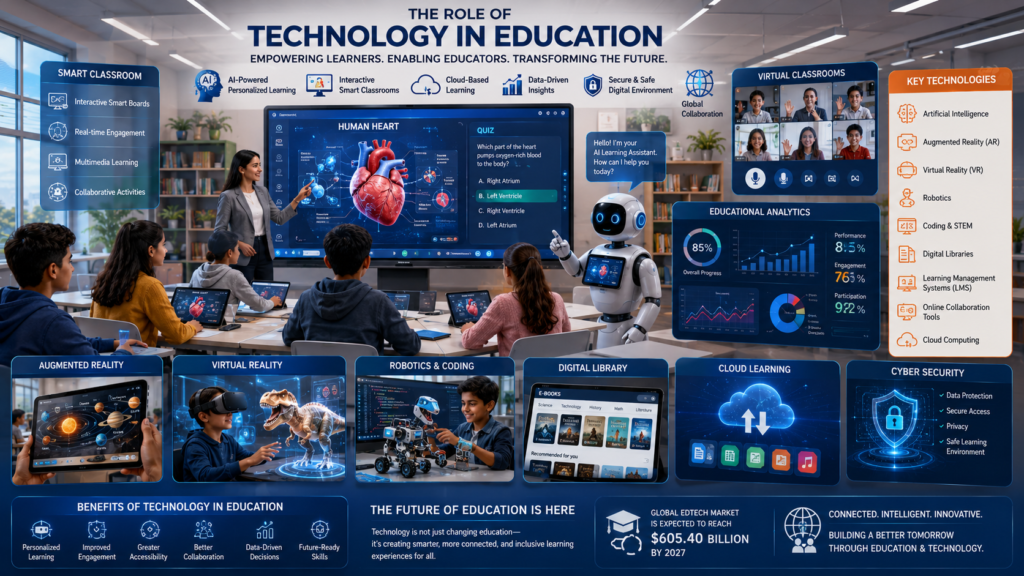
The role of technology in education extends far beyond replacing traditional classrooms with digital platforms. It enables personalized learning experiences, improves accessibility, enhances collaboration, and prepares students with the digital skills required for the future workforce.
As educational institutions continue embracing digital transformation, technology is becoming the foundation for more engaging, efficient, and inclusive learning environments.
What Is Educational Technology?
Educational technology (EdTech) refers to the use of digital tools, software, hardware, and online platforms to improve teaching, learning, and educational administration.
Examples include:
- Learning Management Systems (LMS)
- Virtual classrooms
- AI-powered tutoring
- Smart classrooms
- Educational mobile applications
- Digital assessments
- Cloud-based collaboration platforms
These technologies help create flexible and interactive learning experiences for students of all ages.
Why Technology Is Essential in Modern Education
Traditional education methods often struggle to meet the demands of today’s digital world.
Common challenges include:
- Limited access to quality education
- Lack of personalized learning
- Geographic barriers
- Inefficient administrative processes
- Difficulty tracking student performance
Technology addresses these challenges by providing scalable, flexible, and data-driven learning solutions.
Key Technologies Transforming Education
1. Interactive Learning Tools
Interactive learning platforms make education more engaging through multimedia content, quizzes, simulations, and collaborative activities.
Platforms like Google for Education provide educators with collaborative digital tools that enhance classroom engagement and support personalized learning experiences.
https://edu.google.com
Benefits include:
- Higher student engagement
- Better knowledge retention
- Increased classroom participation
- Enhanced collaboration
2. Online Learning Platforms
Online education enables students to learn anytime and anywhere.
Popular features include:
- Live virtual classes
- Recorded lectures
- Self-paced learning
- Discussion forums
- Assignment management
Solutions such as Microsoft Education provide cloud-based learning environments, collaboration tools, and AI-powered educational resources that support both educators and students.
https://www.microsoft.com/education
These platforms expand access to quality education regardless of location.
3. Artificial Intelligence in Education
AI is revolutionizing education through personalized learning experiences.
Applications include:
- Intelligent tutoring systems
- Automated grading
- Personalized learning paths
- Student performance prediction
- AI-powered chatbots
AI helps educators identify learning gaps and provide targeted support.
4. Learning Analytics
Educational institutions increasingly rely on data analytics to improve student outcomes.
Analytics help institutions:
- Monitor academic progress
- Identify at-risk students
- Improve curriculum planning
- Support evidence-based decision-making
5. Cloud Computing
Cloud technology enables secure access to educational resources from any device.
Benefits include:
- Easy file sharing
- Real-time collaboration
- Secure data storage
- Reduced infrastructure costs
Cloud computing supports flexible and scalable learning environments.
Benefits of Technology in Education
Technology offers numerous advantages for students, educators, and institutions.
Improved Accessibility
Students can access educational resources anytime and anywhere.
Personalized Learning
Technology adapts learning experiences to individual student needs and learning styles.
Better Collaboration
Digital platforms encourage teamwork between students and teachers.
Increased Engagement
Interactive content makes learning more enjoyable and effective.
Efficient Administration
Automation reduces manual administrative work and improves operational efficiency.
Challenges of Technology Integration
Despite its advantages, educational technology presents several challenges.
Digital Divide
Not all students have equal access to internet connectivity or digital devices.
Cybersecurity Risks
Educational institutions must protect sensitive student information from cyber threats.
Teacher Training
Educators require continuous professional development to effectively use digital technologies.
Implementation Costs
Deploying advanced educational technologies requires significant investment and planning.
Best Practices for Technology Integration
Educational institutions can maximize success by following these strategies:
Invest in Teacher Training
Continuous professional development helps educators effectively integrate technology into classrooms.
Promote Blended Learning
Combining traditional teaching with digital learning creates balanced educational experiences.
Ensure Digital Security
Implement strong cybersecurity practices to protect educational data.
Use Data-Driven Decision Making
Learning analytics help improve educational outcomes and institutional performance.
Future Outlook
Technology will continue to transform education through innovations such as:
- Artificial Intelligence
- Virtual Reality (VR)
- Augmented Reality (AR)
- Adaptive Learning Platforms
- Intelligent Learning Analytics
- Cloud-Based Education
- Personalized Digital Learning
Future classrooms will become increasingly connected, interactive, and student-centered, preparing learners for an evolving digital economy.
Benefits of Embracing Educational Technology
Organizations and educational institutions that invest in technology gain several advantages:
- Improved student outcomes
- Greater accessibility
- Higher engagement
- Better collaboration
- Enhanced administrative efficiency
- Stronger digital skills development
- Increased educational innovation
These benefits contribute to a more effective and future-ready education system.
Conclusion
The role of technology in education continues to expand as digital innovation reshapes learning experiences around the world. From AI-powered tutoring and cloud-based collaboration to online learning platforms and smart classrooms, technology is making education more accessible, personalized, and efficient.
Institutions that embrace educational technology will be better positioned to prepare students for future careers, improve learning outcomes, and create inclusive educational environments.
As digital transformation accelerates, technology will remain one of the most powerful drivers of educational excellence.
To learn more about our expertise in digital transformation, education technology, and innovative learning solutions, visit our About Us page.
https://morepublicconnect.in/about/
Interested in implementing technology-driven education solutions? Feel free to Contact Us to learn how we can help.
https://morepublicconnect.in/contact/
Frequently Asked Questions (FAQs)
What is educational technology?
Educational technology refers to the use of digital tools, software, and online platforms to improve teaching, learning, and educational management.
How does technology improve education?
Technology enhances accessibility, personalizes learning, improves collaboration, increases engagement, and supports data-driven educational decisions.
What are examples of educational technology?
Examples include learning management systems, virtual classrooms, AI-powered tutoring, educational apps, smart boards, and cloud-based collaboration tools.
What challenges does technology create in education?
Common challenges include cybersecurity risks, unequal access to technology, implementation costs, and the need for teacher training.
What is the future of technology in education?
The future includes AI-powered learning, virtual reality classrooms, adaptive learning systems, cloud-based education, and personalized digital learning experiences.
🚀 Ready to Transform Your Business?
From AI and Agentic AI to Cloud, Data, Automation, and Digital Transformation, KPSmart IT Solutions helps businesses turn technology opportunities into measurable business outcomes.
Have a challenge? Have an idea? Let’s talk.
👉 Explore KPSmart IT Solutions
KPSmart IT Solutions — Build Smart. Automate. Transform. Grow.
#KPSmartITSolutions #AI #ArtificialIntelligence #AgenticAI #DigitalTransformation #BusinessAutomation #EnterpriseAI #Innovation