
Back to: AjitPravas
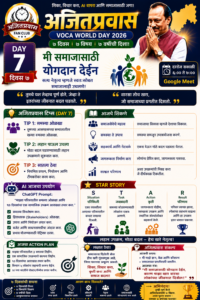
Legacy, Action & Social Impact
Day 7 – Legacy, Action & Social Impact
Theme
From Success to Significance
Learning Objectives
- Habit formation
- Purpose-driven leadership
- Community impact
- Execution excellence
Modules
- Habit Building
- Execution Strategy
- Social Innovation
- Sustainability
- Personal Legacy
Frameworks
- Kaizen
- PDCA Cycle
- SMART Goals
- OKRs
Case Studies
- Anand Kumar (Super 30)
- Dr. Verghese Kurien
- Azim Premji
Activity
Design a Community Impact Project.
Deliverable
90-Day Action Plan and Personal Leadership Manifesto
Day 7 – Legacy, Action & Social Impact
From Success to Significance
“Success is measured by what you achieve for yourself. Significance is measured by what you leave behind for others.”
Every professional dreams of success—a rewarding career, financial stability, recognition, and personal growth. However, history remembers people not merely for their achievements but for the lives they transformed, the institutions they built, and the positive change they created.
True leadership extends beyond individual accomplishment. It is about using knowledge, skills, influence, and resources to create opportunities for others and contribute meaningfully to society.
The final day of this program is designed to help participants transition from personal success to purposeful leadership by cultivating lifelong habits, executing meaningful goals, driving social innovation, embracing sustainability, and creating a lasting legacy.
This session concludes the seven-day journey by transforming learning into action.
Why Legacy Matters
Every person leaves behind a legacy.
The question is:
Will your legacy be accidental or intentional?
Throughout history, influential leaders have been remembered because they:
-
Solved important problems.
-
Improved lives.
-
Built institutions.
-
Inspired future generations.
-
Created sustainable change.
Legacy is not determined by wealth.
Legacy is determined by impact.
The Difference Between Success and Significance
| Success | Significance |
|---|---|
| Personal achievement | Collective impact |
| Career growth | Community transformation |
| Wealth creation | Value creation |
| Recognition | Contribution |
| Position | Purpose |
| Short-term rewards | Long-term influence |
Success benefits you.
Significance benefits generations.
Learning Objectives
By the end of this session, participants will be able to:
-
Build productive habits for lifelong growth.
-
Execute goals with consistency and discipline.
-
Design community-focused innovation initiatives.
-
Apply sustainability principles in leadership.
-
Create a meaningful personal legacy.
-
Translate vision into measurable action.
-
Develop a 90-day implementation strategy.
-
Write a personal leadership manifesto.
Module 1: Habit Building
Small Habits Create Extraordinary Results
Large achievements rarely occur through dramatic actions.
They are the result of small, consistent habits repeated over time.
Every successful leader develops routines that support continuous improvement.
The Habit Loop
According to behavioral science, habits develop through four stages:
Cue
↓
Craving
↓
Response
↓
Reward
When repeated consistently, these behaviors become automatic.
Keystone Habits
Certain habits create positive ripple effects.
Examples:
-
Reading daily.
-
Regular exercise.
-
Journaling.
-
Time blocking.
-
Reflection.
-
Continuous learning.
-
Gratitude practice.
Improving one habit often improves many others.
Building Better Habits
-
Start small.
-
Make habits obvious.
-
Remove distractions.
-
Track progress.
-
Celebrate consistency.
-
Never miss twice.
Consistency is more valuable than intensity.
Module 2: Execution Strategy
Ideas Have No Value Without Execution
Many people have excellent ideas.
Few consistently execute them.
Execution transforms vision into measurable results.
The Execution Formula
Vision
↓
Strategy
↓
Planning
↓
Action
↓
Measurement
↓
Improvement
↓
Success
Why Execution Fails
-
Lack of clarity
-
Poor planning
-
No accountability
-
Fear of failure
-
Inconsistent action
-
No review mechanism
Great leaders execute relentlessly.
Principles of Execution Excellence
-
Prioritize important work.
-
Focus on measurable outcomes.
-
Break large goals into smaller milestones.
-
Review progress regularly.
-
Learn from setbacks.
Module 3: Social Innovation
Innovation That Improves Society
Social innovation uses creativity, technology, and entrepreneurship to solve community problems.
Rather than asking:
“How can I make money?”
Social innovators ask:
“How can I improve lives sustainably?”
Areas for Social Innovation
-
Education
-
Healthcare
-
Agriculture
-
Clean Energy
-
Digital Inclusion
-
Financial Literacy
-
Women’s Empowerment
-
Skill Development
-
Waste Management
-
Water Conservation
The Social Innovation Process
Observe
↓
Understand
↓
Collaborate
↓
Innovate
↓
Prototype
↓
Implement
↓
Measure Impact
Characteristics of Social Innovators
-
Empathy
-
Curiosity
-
Collaboration
-
Persistence
-
Ethical leadership
-
Long-term thinking
Module 4: Sustainability
Building a Better Future
Sustainability means meeting today’s needs without compromising future generations.
Modern leaders must balance:
-
Economic growth
-
Environmental responsibility
-
Social equity
These three pillars create long-term resilience.
The Triple Bottom Line
People
Improve quality of life.
Planet
Protect natural resources.
Profit
Ensure economic sustainability.
Successful organizations create value in all three dimensions.
Sustainable Leadership
Responsible leaders:
-
Reduce waste.
-
Use resources efficiently.
-
Promote diversity.
-
Support ethical governance.
-
Invest in communities.
-
Encourage innovation.
Sustainability is no longer optional—it is a strategic necessity.
Module 5: Personal Legacy
What Will People Remember About You?
Legacy is the cumulative impact of your actions, decisions, relationships, and contributions.
Ask yourself:
-
What values do I represent?
-
What problems do I solve?
-
Who becomes better because of my work?
-
What positive change will remain after I am gone?
Components of a Meaningful Legacy
Character
Integrity.
Humility.
Honesty.
Contribution
Helping others succeed.
Knowledge
Sharing expertise.
Mentoring future leaders.
Relationships
Building trust.
Creating collaboration.
Innovation
Leaving behind better systems.
Service
Improving society.
Frameworks for Long-Term Excellence
1. Kaizen
Kaizen is the Japanese philosophy of continuous improvement.
Instead of seeking dramatic breakthroughs, Kaizen encourages small improvements every day.
Kaizen Cycle
Observe
↓
Improve
↓
Implement
↓
Review
↓
Repeat
Improvement never stops.
2. PDCA Cycle (Plan–Do–Check–Act)
The PDCA Cycle is widely used for continuous improvement and quality management.
Plan
Identify objectives and prepare a strategy.
Do
Implement the plan.
Check
Measure results and compare them with expectations.
Act
Standardize successful practices and refine areas requiring improvement.
PDCA creates a disciplined approach to execution and learning.
3. SMART Goals
Effective goals are:
Specific – Clearly defined.
Measurable – Quantifiable.
Achievable – Realistic.
Relevant – Aligned with purpose.
Time-Bound – Linked to deadlines.
Example:
“Complete a professional certification in AI within six months by studying five hours each week.”
SMART goals improve focus and accountability.
4. OKRs (Objectives and Key Results)
OKRs help individuals and organizations align ambitious objectives with measurable outcomes.
Objective
An inspiring goal.
Example:
Become a recognized technology leader in AI.
Key Results
-
Publish 12 technical articles.
-
Deliver 6 industry presentations.
-
Mentor 20 students.
-
Complete two advanced AI certifications.
OKRs encourage measurable progress toward meaningful aspirations.
Case Studies
Anand Kumar – Transforming Education Through Super 30
Anand Kumar founded Super 30, an initiative that provides free coaching, mentorship, and support to talented students from economically disadvantaged backgrounds preparing for India’s competitive engineering entrance examinations.
Rather than allowing financial limitations to determine educational opportunities, he created a model that combined academic excellence with social commitment. Over the years, hundreds of students from Super 30 have secured admission to prestigious engineering institutions and transformed the lives of their families.
Leadership Lesson: One person’s commitment to education can create opportunities for thousands and demonstrate that talent should never be limited by economic circumstances.
Dr. Verghese Kurien – The Architect of India’s White Revolution
Dr. Verghese Kurien transformed India’s dairy industry by empowering millions of small farmers through cooperative institutions. His leadership helped establish a sustainable model that increased rural incomes, improved food security, and made India one of the world’s largest milk producers.
The success of the cooperative movement demonstrated how innovation, community participation, and long-term vision can drive national development.
Leadership Lesson: Sustainable progress is achieved by empowering communities, building institutions, and creating systems that continue to benefit society long after the original leader’s involvement.
Azim Premji – Wealth with Responsibility
Azim Premji, former Chairman of Wipro, is widely recognized for integrating business excellence with philanthropy. Through the Azim Premji Foundation, he has invested extensively in improving public education, teacher development, and institutional capacity across India.
His approach reflects the belief that wealth carries a responsibility to contribute to society and strengthen public institutions.
Leadership Lesson: The highest form of success is using knowledge, influence, and resources to improve the lives of others and strengthen future generations.
Activity: Design a Community Impact Project
Participants will work individually or in teams to design a practical initiative that addresses a real challenge within their community.
Step 1 – Identify a Community Need
Examples include:
-
Digital literacy
-
Financial education
-
Skill development
-
Environmental conservation
-
Women’s empowerment
-
Youth employment
-
Healthcare awareness
-
Waste management
-
Water conservation
-
Mental health awareness
Step 2 – Understand Stakeholders
Identify:
-
Beneficiaries
-
Local government
-
NGOs
-
Educational institutions
-
Businesses
-
Volunteers
-
Sponsors
Gather insights through observation, interviews, or community discussions.
Step 3 – Define the Problem
Develop a concise problem statement that explains the issue, its causes, and its impact on the community.
Step 4 – Design the Solution
Describe:
-
Objectives
-
Target audience
-
Activities
-
Required resources
-
Partnerships
-
Technology support
-
Timeline
Ensure the solution is practical, scalable, and sustainable.
Step 5 – Measure Success
Define measurable indicators such as:
-
Number of beneficiaries
-
Volunteer participation
-
Funds raised
-
Training sessions completed
-
Reduction in waste
-
Increase in digital literacy
-
Community satisfaction
Step 6 – Present the Proposal
Each team will present its Community Impact Project to a review panel, explaining:
-
The problem addressed
-
The proposed solution
-
Expected outcomes
-
Sustainability strategy
-
Long-term community benefits
Deliverable 1: 90-Day Action Plan
Participants will prepare a detailed implementation roadmap for the next 90 days.
The plan should include:
Month 1 – Build Momentum
-
Establish daily success habits.
-
Complete a personal skill assessment.
-
Finalize SMART goals and OKRs.
-
Begin networking with mentors and peers.
-
Identify a community challenge to address.
Month 2 – Take Action
-
Launch the community project.
-
Develop leadership and communication skills.
-
Measure progress against key results.
-
Seek regular feedback and refine the approach.
Month 3 – Scale and Reflect
-
Expand project reach.
-
Document lessons learned.
-
Evaluate outcomes using KPIs.
-
Celebrate achievements.
-
Plan the next phase of growth.
Deliverable 2: Personal Leadership Manifesto
A Personal Leadership Manifesto is a written declaration of who you are, what you believe, and how you intend to lead.
It should include:
1. My Purpose
Why do I choose to lead?
2. My Core Values
The principles that guide my decisions.
3. My Vision
The future I want to help create.
4. My Leadership Commitments
How I will serve, inspire, and develop others.
5. My Standards of Excellence
The behaviors I will practice consistently.
6. My Social Responsibility
How I will contribute to my community and society.
7. My Legacy Statement
The impact I want to leave behind.
This manifesto should be reviewed periodically and refined as participants grow in their careers and leadership journeys.
Integrating the Seven-Day Journey
This final day brings together the themes explored throughout the program:
-
Day 1: Develop a compelling vision.
-
Day 2: Recognize opportunities and solve meaningful problems.
-
Day 3: Build professional excellence and personal credibility.
-
Day 4: Achieve financial intelligence and long-term wealth creation.
-
Day 5: Lead digital transformation with AI and technology.
-
Day 6: Inspire, influence, and lead people effectively.
-
Day 7: Convert success into significance through purposeful action and lasting social impact.
The result is a holistic framework for becoming a visionary, ethical, financially responsible, technologically capable, and socially conscious leader.
Key Takeaways
By the end of Day 7, participants will:
-
Build habits that support lifelong personal and professional growth.
-
Translate vision into disciplined execution using Kaizen, PDCA, SMART Goals, and OKRs.
-
Design innovative, sustainable solutions to community challenges.
-
Understand the role of sustainability in responsible leadership.
-
Learn from the inspiring journeys of Anand Kumar, Dr. Verghese Kurien, and Azim Premji.
-
Develop a practical 90-Day Action Plan that converts learning into measurable results.
-
Write a Personal Leadership Manifesto that defines their purpose, values, and commitment to serving others.
-
Leave the program with a clear roadmap for creating value not only for themselves but also for their organizations, communities, and future generations.
“The true measure of leadership is not the position you hold or the wealth you accumulate, but the lives you enrich, the institutions you strengthen, and the opportunities you create for others. Success may open doors, but significance leaves them open for future generations. Your legacy begins with the choices you make today.”