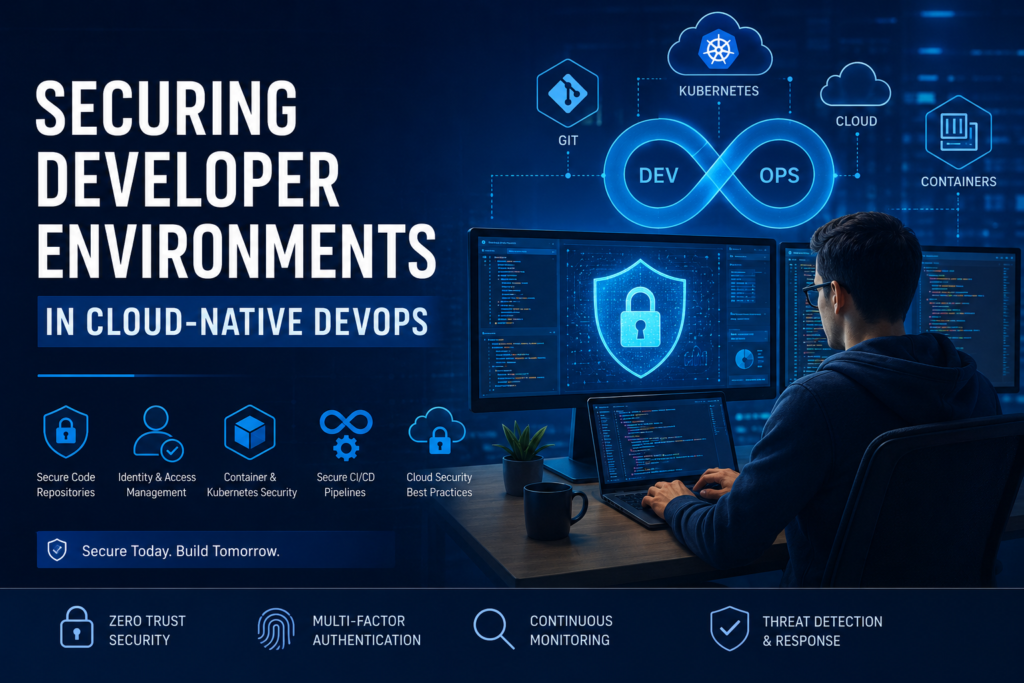
Securing Open‑Source Dependencies in Cloud‑Native DevOps

Cloud‑native DevOps pipelines heavily rely on open‑source libraries, frameworks, and container images, making dependency security one of the most critical yet often overlooked layers. Vulnerable or malicious packages can slip into builds through transitive dependencies, supply‑chain attacks, or outdated base images, allowing attackers to exploit them long after deployment. To mitigate this, organisations integrate Software

Securing Open‑Source Dependencies in Cloud‑Native DevOps Read More »
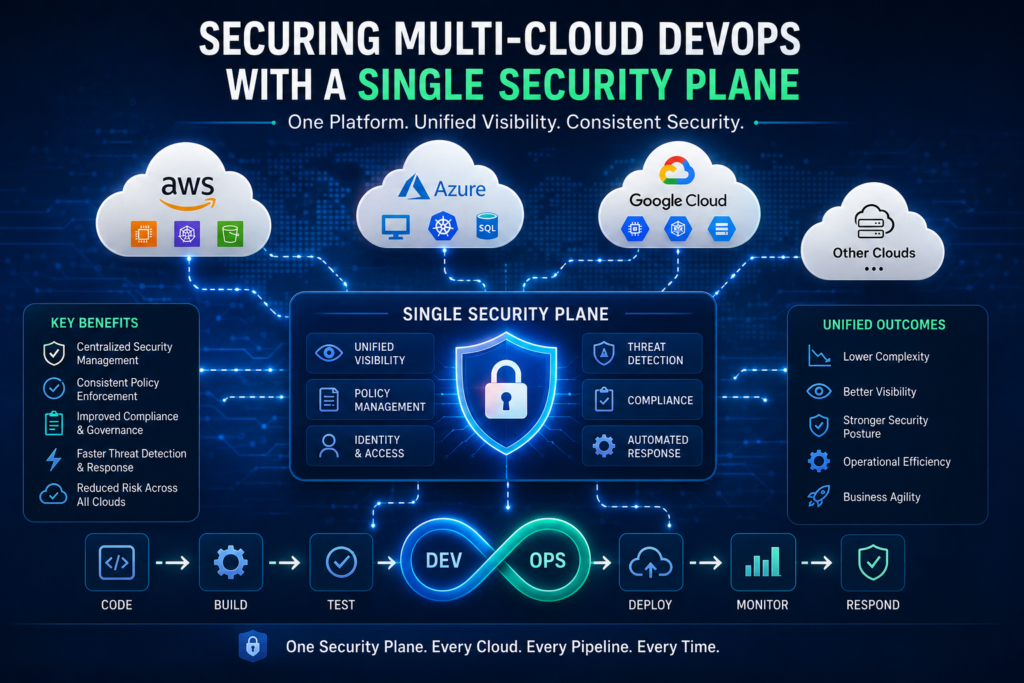
Runtime Security for Cloud‑Native DevOps Workloads

As cloud‑native DevOps shifts more logic into containers, serverless functions, and microservices, traditional perimeter‑based security becomes insufficient. Runtime security focuses on protecting workloads while they are actually running, detecting and blocking malicious behaviour such as unauthorised process execution, unexpected network connections, or suspicious file‑system changes. Security agents embedded in pods, nodes, or cloud‑runtime environments continuously

Runtime Security for Cloud‑Native DevOps Workloads Read More »

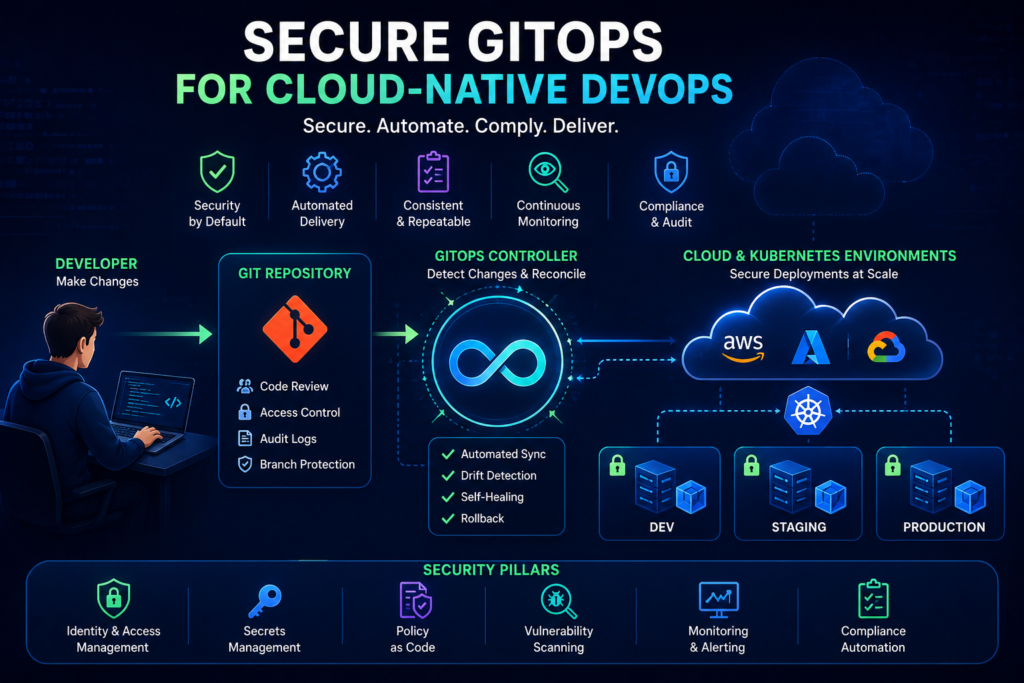
Cloud‑Native DevOps Security Best Practices 2026

Securing cloud‑native DevOps in 2026 means moving beyond point‑in‑time scans and manual gates to a continuous, automated security model across cloud, clusters, containers, and code. Key practices include embedding security early in the pipeline (shift‑left), standardising identity and least‑privilege access, and continuously scanning dependencies, infrastructure‑as‑code, and runtime behaviour. Teams treat security as shared ownership: developers

Cloud‑Native DevOps Security Best Practices 2026 Read More »

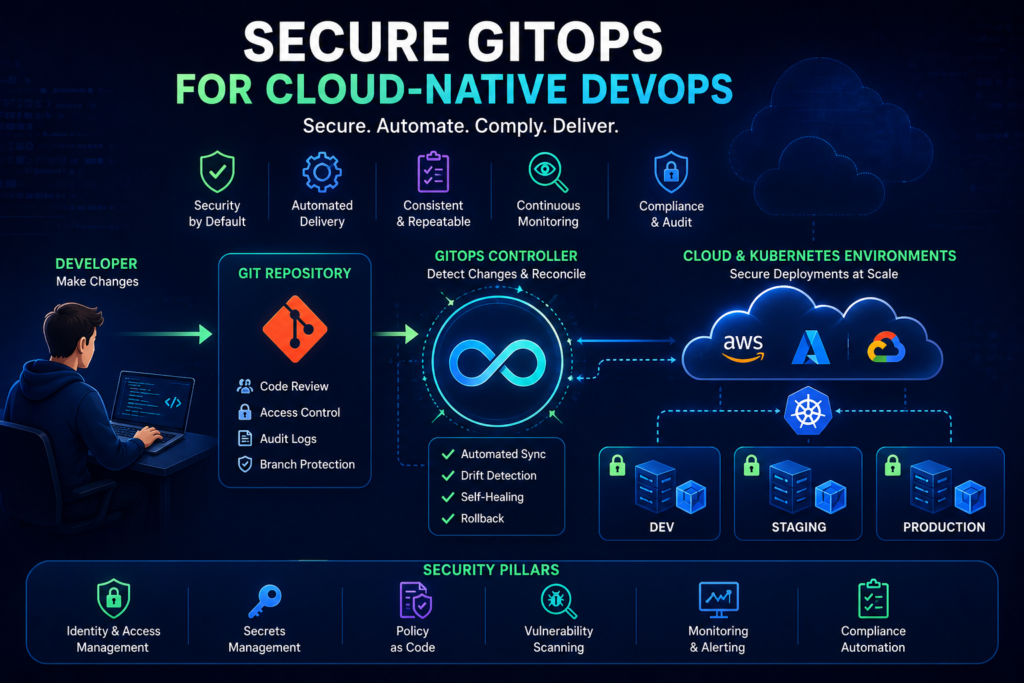
scaling Security Culture in Cloud‑Native DevOps Teams

Cloud‑native DevOps is only as secure as the collective habits and incentives of the teams that build and operate it. Scaling security culture means moving beyond a small “security team” doing isolated audits to a model where every engineer, SRE, and product owner feels responsible for security outcomes. This is achieved by embedding security visibility—metrics,

scaling Security Culture in Cloud‑Native DevOps Teams Read More »

How Intelligent Automation is Improving Business Operations

Intelligent automation is transforming modern business operations by combining Artificial Intelligence, machine learning, and robotic process automation (RPA) to automate repetitive tasks and improve efficiency. Organizations across industries are adopting intelligent automation to reduce operational costs and increase productivity. Traditional automation handled rule-based tasks, while intelligent automation can analyze data, make decisions, and adapt to

How Intelligent Automation is Improving Business Operations Read More »

How Zero Trust Architecture Improves Enterprise Cybersecurity

Zero Trust Architecture is becoming one of the most important cybersecurity models for modern enterprises. Unlike traditional security approaches that trust users inside a network, Zero Trust follows the principle of “never trust, always verify.” This model continuously authenticates users, devices, and applications before granting access to systems or sensitive data. Organizations use technologies such

How Zero Trust Architecture Improves Enterprise Cybersecurity Read More »

Securing CI/CD Pipelines with Secrets‑Safe Workflows

Blog Body Modern cloud‑native CI/CD pipelines frequently fail security checks because secrets leak into logs, artifacts, or configuration files used by developers and automation. A secrets‑safe workflow begins by treating the CI/CD pipeline itself as a privileged identity: each job is granted a minimal, role‑bounded set of secrets, not a broad “admin” credential. Secrets are

Securing CI/CD Pipelines with Secrets‑Safe Workflows Read More »

Zero‑Trust Secrets Management for Cloud‑Native Environments

In a zero‑trust world, credentials are never assumed to be safe, even inside a trusted network or cloud account. Secrets management in cloud‑native environments must therefore enforce strong identity‑based access, short‑lived tokens, and continuous verification at every interaction. Instead of granting broad, static credentials to services, each workload receives narrowly scoped secrets tied to its

Zero‑Trust Secrets Management for Cloud‑Native Environments Read More »

Automated Secrets Rotation and Revocation in CI/CD

In cloud‑native CI/CD, manually rotating secrets after a suspected incident or team change is too slow and error‑prone. Automated secrets rotation and revocation workflows ensure that every credential has a known lifetime, after which it is automatically refreshed or invalidated without requiring human intervention. CI/CD pipelines can trigger rotation on deployment, on a schedule, or

Automated Secrets Rotation and Revocation in CI/CD Read More »

Scroll to Top

SPIN TO WIN!

  • Try your lucky to get discount coupon
  • 1 spin per email
  • No cheating
Try Your Lucky
Never
Remind later
No thanks