
Back to: AjitPravas
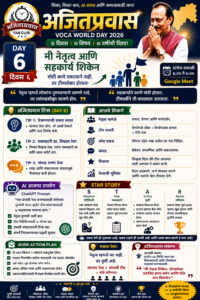
Day 6 – Leadership, Networking & Influence
Theme
Lead Without Authority
Learning Objectives
- Leadership styles
- Team building
- Networking
- Conflict resolution
Modules
- Leadership Styles
- Team Dynamics
- Negotiation
- Networking
- Conflict Management
- Personal Influence
Frameworks
- Situational Leadership
- Servant Leadership
- Stakeholder Mapping
- Johari Window
Case Studies
- Dr. A. P. J. Abdul Kalam
- Ratan Tata
- Indra Nooyi
Activity
Leadership Challenge
Deliverable
Leadership Development Plan
Day 6 – Leadership, Networking & Influence
Lead Without Authority
“Leadership is not about a title, position, or hierarchy. It is about inspiring people to achieve a shared vision.”
In today’s rapidly changing world, leadership is no longer confined to CEOs, managers, or elected officials. Every professional, entrepreneur, educator, researcher, and community member has the opportunity to lead by influencing others through knowledge, character, trust, and action.
Modern organizations operate in flatter structures where collaboration often matters more than authority. Teams are increasingly cross-functional, geographically distributed, and culturally diverse. In such environments, professionals who can influence without formal power become invaluable assets.
Leadership today is about building trust, creating opportunities, empowering people, resolving conflicts, and bringing out the best in others.
This session is designed to help participants become influential leaders capable of leading teams, building meaningful relationships, resolving conflicts constructively, and creating lasting impact.
Why Leadership Matters
Leadership exists wherever people work toward a common purpose.
Whether you are:
-
Managing a business
-
Leading a startup
-
Coordinating volunteers
-
Teaching students
-
Building a project team
-
Leading digital transformation
-
Working in government
Your success depends on your ability to influence people.
The greatest leaders rarely depend on authority.
They earn trust.
They inspire action.
They create leaders.
Leadership in the AI Era
Artificial Intelligence is transforming technology, but leadership remains deeply human.
Machines can analyze data.
Leaders inspire people.
AI can automate decisions.
Leaders create vision.
Technology improves efficiency.
Leadership creates purpose.
The future belongs to leaders who combine emotional intelligence, ethical judgment, innovation, and digital awareness.
Learning Objectives
By the end of this session, participants will be able to:
-
Understand different leadership styles.
-
Build high-performing teams.
-
Develop professional networking skills.
-
Resolve workplace conflicts constructively.
-
Strengthen negotiation and influence.
-
Build trust across organizations.
-
Develop their own leadership philosophy.
-
Create a structured leadership development plan.
Module 1: Leadership Styles
What is Leadership?
Leadership is the ability to influence individuals or teams toward achieving a common objective while creating an environment of trust, collaboration, and continuous improvement.
Leadership differs from management.
| Management | Leadership |
|---|---|
| Controls processes | Inspires people |
| Maintains systems | Creates vision |
| Focuses on efficiency | Focuses on transformation |
| Uses authority | Builds influence |
| Ensures compliance | Encourages commitment |
Great organizations need both management and leadership.
Major Leadership Styles
Transformational Leadership
Leaders inspire change through vision and innovation.
Characteristics:
-
Motivates teams
-
Encourages creativity
-
Drives organizational transformation
Best suited for innovation and change initiatives.
Democratic Leadership
Decision-making involves team participation.
Advantages:
-
Higher engagement
-
Better collaboration
-
Strong ownership
Coaching Leadership
Focuses on developing people.
Leaders become mentors.
They invest in long-term employee growth.
Visionary Leadership
Creates compelling long-term direction.
Keeps teams aligned during uncertainty.
Adaptive Leadership
Responds effectively to changing environments.
Encourages experimentation and learning.
Characteristics of Great Leaders
-
Integrity
-
Accountability
-
Humility
-
Courage
-
Empathy
-
Strategic thinking
-
Continuous learning
-
Service mindset
Leadership begins with character.
Module 2: Team Dynamics
Great Teams Do Not Happen by Accident
Successful teams share:
-
Trust
-
Respect
-
Accountability
-
Open communication
-
Shared goals
Leadership creates the environment where collaboration flourishes.
Stages of Team Development
According to Bruce Tuckman:
Forming
Members meet.
Expectations are unclear.
Storming
Differences emerge.
Conflicts arise.
Leadership becomes critical.
Norming
Trust develops.
Roles become clear.
Performing
High collaboration.
Strong productivity.
Innovation increases.
Adjourning
Project concludes.
Lessons are documented.
Achievements celebrated.
Building High-Performance Teams
Effective leaders:
-
Define purpose.
-
Clarify roles.
-
Encourage diversity.
-
Recognize achievements.
-
Promote accountability.
-
Build psychological safety.
Module 3: Negotiation
Leadership Through Mutual Value
Negotiation is an essential leadership competency.
Every leader negotiates:
-
Budgets
-
Deadlines
-
Resources
-
Partnerships
-
Customer expectations
-
Team priorities
The goal is not winning.
The goal is creating value.
Negotiation Process
Preparation
↓
Understanding Interests
↓
Generating Options
↓
Building Agreement
↓
Maintaining Relationships
Principles of Successful Negotiation
-
Listen actively.
-
Understand interests.
-
Separate emotion from facts.
-
Focus on shared objectives.
-
Build trust.
Module 4: Networking
Your Network Is Your Net Worth
Professional success depends not only on what you know but also on who knows your work and trusts your expertise.
Networking creates opportunities.
Relationships create careers.
Why Networking Matters
Networking provides:
-
Career opportunities
-
Mentorship
-
Partnerships
-
Investment opportunities
-
Knowledge sharing
-
Business growth
Building Meaningful Relationships
Networking is about giving before receiving.
Great professionals:
-
Share knowledge.
-
Help others.
-
Stay connected.
-
Celebrate others’ success.
-
Build trust consistently.
Professional Networking Strategy
Build
↓
Connect
↓
Contribute
↓
Collaborate
↓
Create Opportunities
Online Networking
Professional networking platforms allow individuals to:
-
Showcase expertise.
-
Publish insights.
-
Connect globally.
-
Build credibility.
-
Discover opportunities.
Authenticity and consistency matter more than the number of connections.
Module 5: Conflict Management
Conflict Is Natural
Conflict is neither good nor bad.
Poorly managed conflict destroys teams.
Well-managed conflict creates innovation.
Sources of Conflict
-
Miscommunication
-
Resource constraints
-
Personality differences
-
Unclear expectations
-
Competing priorities
-
Organizational change
Conflict Resolution Process
Identify Issue
↓
Listen
↓
Understand Perspectives
↓
Explore Solutions
↓
Agree
↓
Follow Up
Leadership During Conflict
Leaders should:
-
Remain calm.
-
Focus on facts.
-
Encourage dialogue.
-
Avoid blame.
-
Seek common ground.
-
Protect relationships.
Module 6: Personal Influence
Influence Is Leadership Without Authority
Influence comes from credibility rather than position.
People follow leaders because they:
-
Trust them.
-
Respect them.
-
Believe in their vision.
-
Value their expertise.
Building Influence
Competence
Become exceptionally skilled.
Credibility
Keep commitments.
Maintain integrity.
Communication
Explain ideas clearly.
Consistency
People trust predictable behavior.
Service
Help others succeed.
Leadership is multiplication—not self-promotion.
Leadership Frameworks
1. Situational Leadership
Developed by Paul Hersey and Ken Blanchard, Situational Leadership suggests that no single leadership style works in every circumstance.
Effective leaders adapt based on the competence and commitment of their team members.
Directing
Provide clear instructions and close supervision for individuals who are new or require significant guidance.
Coaching
Offer direction while encouraging questions, learning, and confidence-building.
Supporting
Facilitate collaboration and empower capable team members who need encouragement rather than instruction.
Delegating
Entrust experienced, self-motivated individuals with responsibility and decision-making authority.
Leadership Lesson: Flexibility is a hallmark of effective leadership.
2. Servant Leadership
Servant Leadership, popularized by Robert K. Greenleaf, emphasizes serving others before seeking personal recognition.
Servant leaders:
-
Empower employees.
-
Build trust.
-
Develop future leaders.
-
Encourage collaboration.
-
Prioritize long-term organizational health.
Leadership is measured by the success of those you serve.
3. Stakeholder Mapping
Every project involves multiple stakeholders with different expectations.
Stakeholder Mapping helps leaders identify:
-
Customers
-
Employees
-
Investors
-
Government agencies
-
Suppliers
-
Communities
-
Partners
Power–Interest Matrix
| Category | Leadership Approach |
|---|---|
| High Power, High Interest | Manage Closely |
| High Power, Low Interest | Keep Satisfied |
| Low Power, High Interest | Keep Informed |
| Low Power, Low Interest | Monitor Periodically |
Understanding stakeholder expectations improves communication, reduces resistance, and supports successful project outcomes.
4. Johari Window
The Johari Window is a framework for increasing self-awareness and improving interpersonal relationships.
It consists of four quadrants:
Open Area
Information known to yourself and others.
Blind Spot
Information others know about you but you may not recognize.
Hidden Area
Information you know but choose not to share.
Unknown Area
Potential talents, behaviors, or opportunities that neither you nor others have yet discovered.
Leaders expand the “Open Area” through feedback, reflection, and honest communication.
Leadership Communication
Effective leaders communicate with purpose.
They:
-
Listen actively.
-
Ask meaningful questions.
-
Recognize achievements.
-
Share vision consistently.
-
Encourage open dialogue.
-
Create psychological safety.
Leadership conversations build organizational culture.
Case Studies
Dr. A. P. J. Abdul Kalam – Inspiring Through Vision and Humility
Dr. A. P. J. Abdul Kalam, India’s former President and renowned aerospace scientist, exemplified leadership through knowledge, humility, and service. While leading major space and missile development programs, he encouraged collaboration across multidisciplinary teams, empowered young scientists, and accepted responsibility during setbacks while sharing credit during successes.
As President, he continued to inspire millions of students by promoting scientific curiosity, innovation, and national development.
Leadership Lesson: Great leaders inspire people with vision, remain humble in success, take responsibility during failure, and invest in developing future generations.
Ratan Tata – Values-Based Leadership
Ratan Tata transformed the Tata Group into a globally respected enterprise while maintaining a strong commitment to ethics, social responsibility, and employee welfare. Under his leadership, the group expanded internationally through strategic acquisitions while continuing to invest in education, healthcare, and community development through Tata Trusts.
His decisions consistently reflected long-term thinking rather than short-term gains.
Leadership Lesson: Sustainable leadership balances business excellence with integrity, compassion, and social responsibility.
Indra Nooyi – Leading with Purpose
As the former CEO of PepsiCo, Indra Nooyi introduced the “Performance with Purpose” strategy, demonstrating that business growth and societal responsibility can reinforce each other. She emphasized healthier product portfolios, environmental sustainability, diversity, and employee development while driving strong financial performance.
Her leadership style combined strategic thinking with empathy and clear communication.
Leadership Lesson: Modern leaders create value by integrating purpose, innovation, and people-centric decision-making.
Activity: Leadership Challenge
Participants will take part in a team-based leadership simulation designed to test strategic thinking, collaboration, communication, and influence.
Scenario
A city has experienced severe flooding following heavy rainfall. As members of an emergency response task force, participants must coordinate relief efforts with limited resources and multiple stakeholders.
The team must address challenges such as:
-
Limited food and medical supplies.
-
Disrupted transportation.
-
Conflicting priorities among stakeholders.
-
Public communication under pressure.
-
Volunteer coordination.
-
Resource allocation.
-
Media inquiries.
-
Long-term recovery planning.
Participants assume roles including:
-
Incident Commander
-
Government Representative
-
NGO Coordinator
-
Healthcare Officer
-
Community Leader
-
Logistics Manager
-
Communications Lead
Tasks
-
Assess the situation.
-
Prioritize immediate needs.
-
Allocate available resources.
-
Resolve conflicts among stakeholders.
-
Develop a coordinated action plan.
-
Present recommendations to an executive review panel.
Evaluation Criteria
-
Leadership effectiveness.
-
Team collaboration.
-
Decision-making quality.
-
Communication clarity.
-
Stakeholder management.
-
Conflict resolution.
-
Ethical judgment.
-
Ability to influence without formal authority.
Deliverable: Leadership Development Plan
Each participant will prepare a comprehensive Leadership Development Plan that outlines their pathway to becoming a more effective leader.
The plan should include:
-
Personal Leadership Philosophy
-
Core Values and Guiding Principles
-
Leadership Style Assessment
-
Strengths and Development Areas
-
Emotional Intelligence Improvement Goals
-
Communication and Networking Strategy
-
Conflict Management Action Plan
-
Mentorship and Coaching Objectives
-
Stakeholder Relationship Map
-
Learning and Certification Roadmap
-
Leadership Milestones (1-Year, 3-Year, and 7-Year)
-
Quarterly Reflection and Feedback Plan
-
Success Metrics and Personal KPIs
Key Takeaways
By the end of Day 6, participants will:
-
Understand how leadership differs from management and why influence is more powerful than authority.
-
Adapt leadership styles using Situational Leadership principles.
-
Build high-performing teams through trust, collaboration, and shared purpose.
-
Develop strong networking skills that create long-term professional opportunities.
-
Resolve conflicts through empathy, structured dialogue, and negotiation.
-
Strengthen personal influence through credibility, competence, and ethical behavior.
-
Apply frameworks such as Servant Leadership, Stakeholder Mapping, and the Johari Window to lead more effectively.
-
Learn from the leadership journeys of Dr. A. P. J. Abdul Kalam, Ratan Tata, and Indra Nooyi.
-
Create a practical Leadership Development Plan aligned with personal values and long-term career aspirations.
“Leadership is not granted by designation—it is earned through trust, integrity, and service. The leaders who leave the greatest legacy are those who elevate others, unite diverse perspectives, and inspire people to achieve a purpose greater than themselves. In an AI-driven world, influence rooted in character and compassion will remain humanity’s greatest leadership advantage.”