
Back to: AjitPravas
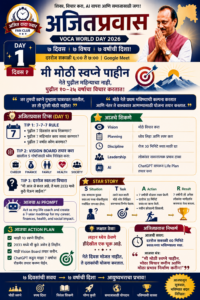
Theme: Create Your Future Before It Happens
Learning Objectives
- Develop long-term thinking
- Build personal and professional vision
- Align purpose with career aspirations
Modules
- Understanding Vision vs Goals
- Strategic Thinking Frameworks
- Future Trends Analysis
- Personal SWOT Analysis
- Creating a 7-Year Roadmap
IIM Frameworks
- Vision Canvas
- SWOT Analysis
- PESTLE Analysis
- Blue Ocean Thinking
- Ikigai Model
Case Studies
- Tata Group
- ISRO Vision
- Apple Vision Strategy
Activity
Develop your Personal Strategic Vision Document.
Deliverable
7-Year Personal Growth Blueprint
Day 1: Create Your Future Before It Happens
Visionary Thinking & Strategic Goal Setting
“The best way to predict the future is to create it.” – Peter Drucker
Most people spend more time planning a vacation than planning their future. They react to opportunities instead of creating them. The world’s most successful leaders, entrepreneurs, scientists, and innovators share one common habit—they think years ahead while taking action today.
This session is designed to help you move from living by chance to living by design. By the end of this course, you will have a clear personal vision, strategic goals, and a practical roadmap for the next seven years.
Why Vision Matters
Imagine boarding a flight without knowing its destination. No matter how advanced the aircraft is, it cannot take you where you want to go if the destination is unknown.
Life works the same way.
Many people work hard every day, but few pause to ask:
-
Where am I heading?
-
What kind of life do I want?
-
What impact do I want to create?
-
Will my current actions lead me there?
Vision provides direction before action.
Without vision:
-
Hard work becomes busy work.
-
Success becomes accidental.
-
Opportunities are easily missed.
-
Motivation fades during challenges.
With vision:
-
Decisions become easier.
-
Priorities become clearer.
-
Resources are used wisely.
-
Progress becomes measurable.
Learning Objectives
By the end of this session, participants will be able to:
-
Develop long-term strategic thinking.
-
Define a compelling personal and professional vision.
-
Align values, purpose, and career aspirations.
-
Understand future opportunities and emerging trends.
-
Build a structured seven-year personal growth roadmap.
-
Apply management frameworks used by leading business schools and global organizations.
Module 1: Understanding Vision vs Goals
Many people confuse goals with vision.
Vision
Vision answers the question:
“Who do I want to become?”
Vision is long-term.
Examples:
-
Become a respected entrepreneur.
-
Build India’s most innovative AI company.
-
Become a transformational leader.
-
Improve healthcare through technology.
Vision inspires.
Goals
Goals answer:
“What do I need to achieve?”
Examples:
-
Complete MBA.
-
Earn ₹20 lakh annually.
-
Learn Artificial Intelligence.
-
Read 24 books this year.
Goals support the vision.
Think of it like this:
Vision is the destination.
Goals are milestones.
Tasks are the daily actions.
Activity
Write your personal vision in one sentence.
Example:
“I want to become a globally respected technology leader creating AI solutions that improve millions of lives.”
Module 2: Strategic Thinking Frameworks
Successful leaders don’t simply react—they anticipate.
Strategic thinking means making today’s decisions with tomorrow in mind.
Key characteristics include:
-
Seeing opportunities before others.
-
Understanding long-term consequences.
-
Allocating resources wisely.
-
Making decisions based on future impact rather than immediate comfort.
The Strategic Thinking Process
-
Observe
-
Analyze
-
Predict
-
Decide
-
Execute
-
Review
-
Improve
Questions Every Strategic Thinker Asks
-
What will change over the next decade?
-
Which skills will become obsolete?
-
Which industries will grow?
-
Where should I invest my time?
-
What problems will people pay to solve?
Module 3: Future Trends Analysis
The world is changing faster than ever.
Understanding trends helps us prepare rather than react.
Major Global Trends
Artificial Intelligence
AI is transforming every profession.
Examples include:
-
Healthcare
-
Education
-
Manufacturing
-
Finance
-
Agriculture
-
Government
Automation
Routine work is increasingly handled by software and robots.
Future careers will focus on creativity, strategy, innovation, and leadership.
Digital Transformation
Every organization is becoming technology-driven.
Digital skills are no longer optional.
Sustainability
Businesses increasingly focus on:
-
Renewable energy
-
ESG practices
-
Circular economy
-
Climate resilience
Lifelong Learning
Degrees alone are no longer enough.
Continuous learning has become essential for career growth.
Module 4: Personal SWOT Analysis
SWOT is one of the simplest yet most powerful strategic planning tools.
| Strengths | Weaknesses |
|---|---|
| What am I good at? | What limits me? |
| Opportunities | Threats |
|---|---|
| What can I leverage? | What risks exist? |
Example
Strengths
-
Technical expertise
-
Communication
-
Discipline
Weaknesses
-
Fear of public speaking
-
Limited financial knowledge
Opportunities
-
AI revolution
-
Global remote jobs
-
Online education
Threats
-
Automation
-
Economic uncertainty
-
Rapid technological change
Activity
Complete your own SWOT analysis.
Then identify:
-
Three strengths to leverage.
-
Three weaknesses to improve.
-
Three opportunities to pursue.
-
Three risks to prepare for.
Module 5: Creating a Seven-Year Roadmap
Why seven years?
Meaningful transformation takes consistent effort over time. A seven-year horizon is long enough to create significant personal and professional change while remaining practical for planning.
Instead of focusing only on annual resolutions, create a roadmap with progressive milestones.
Year 1 – Foundation
-
Build discipline and daily habits.
-
Improve communication.
-
Learn digital and AI skills.
Year 2 – Skill Expansion
-
Gain certifications.
-
Lead small projects.
-
Expand professional network.
Year 3 – Career Growth
-
Secure higher responsibilities.
-
Build expertise.
-
Mentor others.
Year 4 – Financial Stability
-
Develop multiple income streams.
-
Invest consistently.
-
Strengthen financial planning.
Year 5 – Leadership
-
Manage teams.
-
Influence organizational decisions.
-
Speak at conferences or industry events.
Year 6 – Innovation
-
Launch a business, product, or social initiative.
-
Publish research or thought leadership content.
-
Create scalable impact.
Year 7 – Legacy
-
Become a recognized expert.
-
Mentor future leaders.
-
Build an enduring contribution to society.
IIM-Level Strategic Frameworks
1. Vision Canvas
The Vision Canvas provides clarity by answering:
-
Who am I today?
-
Who do I want to become?
-
Why does this matter?
-
What values will guide me?
-
What capabilities must I develop?
-
What impact do I want to create?
2. SWOT Analysis
A structured review of strengths, weaknesses, opportunities, and threats to support strategic decision-making.
3. PESTLE Analysis
Understand the external environment through six dimensions:
-
Political: Government policies, regulations, geopolitical shifts.
-
Economic: Inflation, employment, global markets.
-
Social: Demographics, lifestyles, consumer behavior.
-
Technological: AI, automation, digital innovation.
-
Legal: Compliance, intellectual property, data privacy.
-
Environmental: Sustainability, climate change, resource management.
This helps you anticipate external changes that could affect your career or business.
4. Blue Ocean Thinking
Rather than competing in crowded markets (“red oceans”), Blue Ocean Thinking encourages creating new value where competition is minimal.
Ask yourself:
-
What unique value can I create?
-
What problems remain unsolved?
-
How can I differentiate myself through skills, innovation, or service?
5. Ikigai Model
Ikigai helps align purpose with career by exploring four intersecting questions:
-
What do I love?
-
What am I good at?
-
What does the world need?
-
What can I be paid for?
When these overlap, they reveal a meaningful and sustainable career direction.
Case Studies
Tata Group – Vision Beyond Profit
The Tata Group has consistently prioritized nation-building alongside business growth. Its long-term vision has led to investments in steel, automobiles, IT, hospitality, healthcare, and education, demonstrating that enduring success is built on purpose, ethics, and strategic thinking.
Key Lesson: Sustainable organizations balance profitability with societal impact.
ISRO – A Vision for National Progress
The Indian Space Research Organisation (ISRO) achieved global recognition by focusing on affordable, reliable, and innovative space technology. Through decades of disciplined planning, ISRO has advanced satellite technology, planetary exploration, and national development.
Key Lesson: A clear vision, consistent execution, and innovation can overcome resource constraints.
Apple – Vision-Driven Innovation
Apple transformed multiple industries by focusing on user experience, design excellence, and ecosystem integration rather than simply building products. Its vision of making technology intuitive reshaped computing, music, smartphones, and digital services.
Key Lesson: Great organizations innovate by understanding future customer needs before they become obvious.
Activity: Develop Your Personal Strategic Vision Document
Create a concise document that captures your long-term direction. Include:
-
Personal Vision Statement
-
Core Values
-
Life Purpose
-
Career Aspirations
-
Top Five Strengths
-
Skills to Develop
-
Key Opportunities
-
Potential Risks
-
Seven-Year Milestones
-
Daily Habits and Commitments
Keep the document to one or two pages and review it every six months.
Deliverable: 7-Year Personal Growth Blueprint
By the end of the session, each participant should have a practical blueprint covering:
-
A compelling vision statement.
-
A SWOT analysis.
-
A PESTLE scan of future opportunities.
-
An Ikigai reflection.
-
A Blue Ocean differentiation strategy.
-
A seven-year roadmap with yearly milestones.
-
Quarterly learning goals.
-
Career and financial objectives.
-
Leadership development goals.
-
Health and well-being commitments.
-
Community contribution plans.
-
A personal review schedule to track progress.
Final Reflection
Creating the future is not about predicting every event—it is about preparing yourself to thrive in whatever future unfolds. Vision provides direction, strategy creates the path, and disciplined action turns aspirations into reality. The most successful professionals do not wait for opportunities; they cultivate the mindset, skills, and habits that allow them to recognize and create them. Your seven-year journey begins with the decisions you make today.