
Introduction: The Future of Logistics Is Electric
India’s logistics sector is the backbone of its economy, enabling the movement of goods across industries such as e-commerce, manufacturing, retail, healthcare, and agriculture. As businesses strive to meet rising customer expectations for faster deliveries and greater operational efficiency, the logistics industry is undergoing a major transformation.
However, traditional logistics systems continue to face significant challenges, including rising fuel costs, traffic congestion, high carbon emissions, and inefficient fleet management. These issues not only increase operational expenses but also impact environmental sustainability.
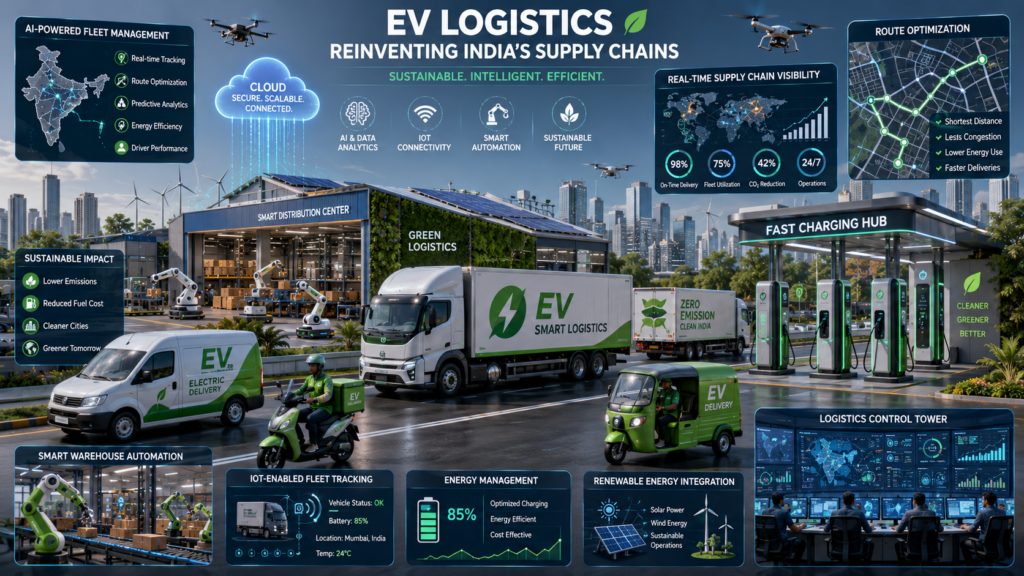
EV logistics in India is emerging as a game-changing solution. By combining electric vehicles (EVs), artificial intelligence (AI), Internet of Things (IoT), cloud computing, and smart logistics technologies, organizations can build cleaner, faster, and more intelligent supply chains.
As India moves toward its vision of becoming a developed nation by 2047, EV logistics will play a crucial role in creating sustainable transportation networks and strengthening economic growth.
What is EV Logistics?
EV logistics refers to the use of electric vehicles for transporting goods across the supply chain. These vehicles include electric two-wheelers, three-wheelers, delivery vans, light commercial vehicles, and electric trucks used for first-mile, middle-mile, and last-mile deliveries.
Unlike conventional diesel-powered fleets, EV logistics combines clean transportation with digital technologies such as AI-powered route optimization, fleet analytics, predictive maintenance, and smart charging infrastructure.
The result is a logistics ecosystem that is more sustainable, cost-effective, and operationally efficient.
Why EV Logistics Matters
India’s logistics sector contributes significantly to the country’s economic growth, but it also accounts for a substantial share of transportation-related emissions.
Several factors are driving the shift toward EV logistics:
- Rising fuel prices
- Increasing urban congestion
- Growing e-commerce demand
- Corporate sustainability goals
- Government initiatives supporting electric mobility
- Advances in battery technology
Businesses that invest in EV logistics can reduce operational costs while improving delivery performance and supporting environmental sustainability.
According to the International Energy Agency (IEA), the adoption of electric vehicles is accelerating globally as countries transition toward cleaner and more sustainable transportation systems.
https://www.iea.org
Challenges Facing Traditional Logistics
Although India’s logistics industry has grown rapidly, several structural challenges continue to affect efficiency.
High Fuel Costs
Fuel expenses remain one of the largest operating costs for logistics companies, reducing profitability and increasing delivery costs.
Traffic Congestion
Urban traffic leads to delayed deliveries, increased fuel consumption, and reduced fleet productivity.
High Carbon Emissions
Conventional diesel vehicles contribute significantly to greenhouse gas emissions and air pollution.
Inefficient Fleet Management
Many organizations still rely on manual planning, resulting in poor route optimization and underutilized fleet capacity.
Fragmented Supply Chains
Disconnected logistics systems make it difficult to achieve end-to-end visibility across transportation and warehousing operations.
Key Technologies Powering EV Logistics
1. Electric Delivery Vehicles
Electric two-wheelers, three-wheelers, vans, and trucks are transforming urban logistics by reducing fuel costs and emissions.
Benefits include:
- Lower operating expenses
- Reduced maintenance costs
- Quiet operation
- Zero tailpipe emissions
- Higher sustainability
2. Artificial Intelligence for Fleet Management
Artificial Intelligence enables logistics companies to optimize operations through:
- Intelligent route planning
- Traffic prediction
- Fleet utilization analysis
- Predictive vehicle maintenance
- Delivery scheduling
AI helps reduce travel time while improving operational efficiency.
3. Smart Charging Infrastructure
Reliable charging infrastructure is essential for successful EV fleet deployment. Platforms such as Open Charge Map help businesses locate EV charging stations and support efficient route planning for electric fleets.
https://openchargemap.org
Modern charging ecosystems include:
- Fast charging stations
- Depot charging
- Battery management systems
- AI-powered charging schedules
- Renewable energy integration
Smart charging minimizes downtime and maximizes fleet productivity.
4. IoT and Real-Time Fleet Tracking
IoT devices continuously monitor vehicle performance and logistics operations.
Key applications include:
- Vehicle tracking
- Battery monitoring
- Driver performance analysis
- Cargo monitoring
- Fuel and energy analytics
Real-time visibility improves decision-making throughout the supply chain.
5. Smart Warehousing
Modern warehouses increasingly integrate automation technologies such as:
- Robotic sorting
- Automated inventory systems
- AI-powered warehouse management
- Barcode and RFID tracking
- Digital inventory monitoring
Smart warehouses improve order accuracy while reducing processing time.
Benefits of EV Logistics in India
Organizations adopting EV logistics gain several competitive advantages.
Reduced Operating Costs
Electric vehicles have significantly lower fuel and maintenance expenses compared to conventional fleets.
Sustainable Transportation
EVs help organizations reduce carbon emissions and support environmental goals.
Faster Deliveries
AI-powered route optimization minimizes delays and improves delivery efficiency.
Improved Customer Satisfaction
Reliable deliveries increase customer trust and strengthen brand reputation.
Better Fleet Visibility
Digital dashboards provide real-time insights into fleet performance and logistics operations.
Industry Trends Driving EV Logistics
India’s logistics ecosystem is rapidly evolving.
Major trends include:
- Rapid growth of e-commerce
- Expansion of electric delivery fleets
- AI-powered logistics management
- Smart warehouse automation
- Renewable energy-powered charging stations
- Cloud-based supply chain platforms
- Data-driven logistics decision-making
Leading organizations are investing heavily in sustainable logistics to improve efficiency while reducing environmental impact.
Companies such as Amazon India are investing in electric delivery vehicles and sustainable logistics initiatives to improve operational efficiency while reducing environmental impact.
https://www.aboutamazon.in/sustainability
Future Outlook: EV Logistics in India by 2047
The future of India’s logistics industry will be defined by intelligent, connected, and sustainable transportation systems.
Over the coming decades, we can expect:
- Majority of urban deliveries becoming fully electric
- AI managing entire logistics networks
- Autonomous warehouse automation
- Smart charging infrastructure across major cities
- Renewable energy integration with fleet operations
- Real-time supply chain visibility through cloud platforms
- Increased adoption of electric freight vehicles
Policy initiatives and technological innovation will continue accelerating India’s transition toward a cleaner and smarter logistics ecosystem.
Best Practices for Implementing EV Logistics
Organizations planning to modernize their logistics operations should consider the following strategies:
Electrify Last-Mile Delivery
Start with electric two-wheelers and delivery vans for urban logistics.
Invest in Smart Fleet Management
Adopt AI-powered fleet management systems to improve route optimization and operational efficiency.
Build Charging Infrastructure
Develop reliable charging networks to support uninterrupted fleet operations.
Integrate Digital Technologies
Leverage IoT, cloud computing, and analytics platforms to enhance supply chain visibility.
Train Employees
Equip logistics teams with the skills needed to operate and maintain EV technologies effectively.
Conclusion
EV logistics in India represents far more than the adoption of electric vehicles. It is the foundation of a smarter, cleaner, and more resilient supply chain ecosystem.
By integrating electric mobility with artificial intelligence, cloud computing, IoT, and automation, organizations can significantly reduce operating costs, improve delivery efficiency, and achieve sustainability goals.
As India continues its journey toward becoming a global manufacturing and digital economy leader, EV logistics will become a critical driver of economic growth and environmental responsibility.
Businesses that embrace EV logistics today will be better positioned to build future-ready supply chains, strengthen customer satisfaction, and contribute to a sustainable transportation ecosystem.
To learn more about our expertise in sustainable mobility, digital transformation, and intelligent logistics solutions, visit our About Us page.
https://morepublicconnect.in/about/
Looking to modernize your logistics operations with electric mobility and AI-driven technologies? Contact Us today to discover how we can help.
https://morepublicconnect.in/contact/
Frequently Asked Questions (FAQs)
What is EV logistics?
EV logistics refers to the use of electric vehicles for transporting goods while integrating smart technologies such as AI, IoT, and cloud computing to improve supply chain efficiency.
Why is EV logistics important?
It reduces fuel costs, lowers carbon emissions, improves fleet efficiency, and supports sustainable transportation.
How does AI improve EV logistics?
AI optimizes delivery routes, predicts maintenance needs, improves fleet utilization, and enables real-time logistics decision-making.
What challenges does EV logistics face?
Key challenges include charging infrastructure availability, battery range, upfront investment, and workforce training.
What is the future of EV logistics in India?
The future includes AI-driven fleet management, electric freight vehicles, smart charging infrastructure, renewable energy integration, and fully connected digital supply chains.
🚀 Ready to Transform Your Business?
From AI and Agentic AI to Cloud, Data, Automation, and Digital Transformation, KPSmart IT Solutions helps businesses turn technology opportunities into measurable business outcomes.
Have a challenge? Have an idea? Let’s talk.
👉 Explore KPSmart IT Solutions
KPSmart IT Solutions — Build Smart. Automate. Transform. Grow.
#KPSmartITSolutions #AI #ArtificialIntelligence #AgenticAI #DigitalTransformation #BusinessAutomation #EnterpriseAI #Innovation